Apple Pay Is Finally Live in India.

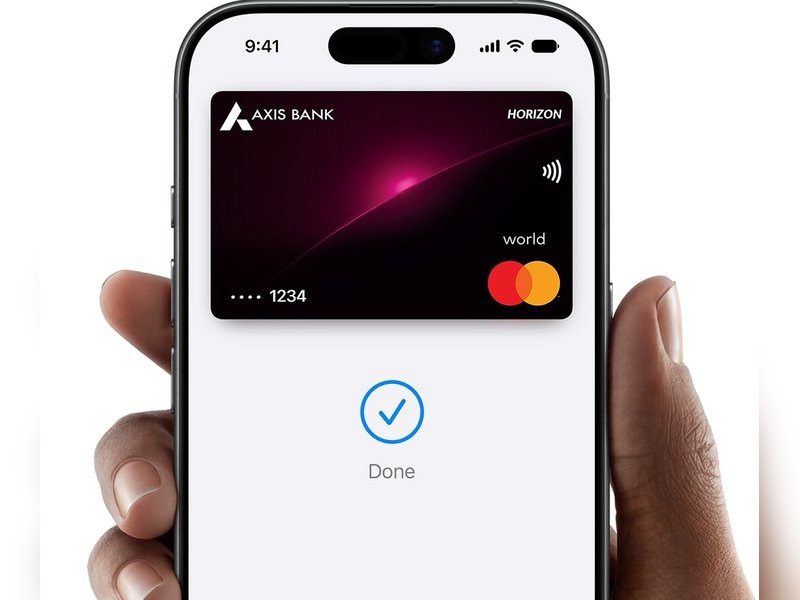
Apple Pay went live in India on 30 September 2026. Indian iPhone owners have been asking for this for years, so the launch matters. But it starts small, and the reasons it starts small say more than the launch itself.
So what did Apple actually launch?
Per Apple’s own announcement, Apple Pay works on iPhone, iPad and Apple Watch, with Mac support “coming soon.” It covers taps in stores, in-app payments and checkout on the web, with no PIN or OTP at the counter.
The limit is the card. Only Axis Bank-issued Visa and Mastercard credit cards can be added. Apple says card rewards and benefits still apply.
You’ll need an iPhone XR or later on iOS 18 or later. For Apple Watch, it’s a Series 6 or later on watchOS 11 or later.

Getting set up
You can add a card from the latest Axis Bank app, or through Wallet on your iPhone (tap the plus sign and follow the prompts). To pay, double-click the side button, authenticate with Face ID, Touch ID or your passcode, then hold the phone near the reader.
Where it works, and where it might not
Apple names Apple Store, Blinkit, Chaayos, Croma, Ixigo, Reliance brands, Tata 1mg and Zomato among launch merchants. It also worked with payment providers like Razorpay, PayU, Pine Labs, Paytm, Cashfree, JusPay, Mswipe and Worldline, which Business Standard’s report also lists.
Expect some inconsistency early on. TechCrunch’s sources say a terminal may work if its payments provider has enabled Apple Pay, and fail if its acquiring bank hasn’t. That’s unconfirmed by Apple, so treat it as a likely rough edge, not a documented fact.
Why only one bank?
This is the most useful question to ask about the launch. The same TechCrunch report says HDFC Bank, ICICI Bank and SBI Card aren’t expected at launch because talks over commercial terms are still going on. It also says Apple wants a fee of about 20 basis points per transaction, against roughly 40 to 50 basis points of margin in the payments layer. Apple and the banks didn’t comment.
Here is my own arithmetic, not a reported figure. If both numbers are right, Apple would be asking for somewhere between 40% and 50% of that margin. That would explain why the biggest issuers are hesitating, since they have the most volume to lose.
It also explains Axis going first. Payment Expert notes that Axis is the fourth-largest credit card issuer in India, behind HDFC, ICICI and SBI Card. A smaller issuer has more to gain from a premium customer base and less to lose from a fee. That’s my reading of the incentives, not something any of the banks have said.

The UPI problem
Apple Pay is card-based. UPI, which moves money directly between bank accounts, carries the bulk of India’s digital payments, and scanning a QR code has become second nature. Razorpay says UPI isn’t supported at launch, and TechCrunch’s sources say RuPay isn’t either.
So Apple isn’t competing for the everyday chai-stall payment. It’s going after the card-paying customer, which is a much smaller pool. Apple did reportedly want more back in 2023. TechCrunch reported then that it wanted iPhones to scan QR codes and start UPI payments without a third-party app. That hasn’t happened.
Why bother, then?
Apple’s position in India has changed. Counterpoint Research, as cited by TechCrunch, put Apple at 28% of India’s smartphone market by value in 2025, up from 23% a year earlier. India also builds about a quarter of the world’s iPhones. Payment Expert estimates 35 to 45 million iPhone owners here, around 7% to 9% of the mobile market (an estimate, not an Apple figure).
Those users tend to hold premium cards, which is the audience banks want. Even a niche service can pay off for Apple if it earns a fee on each transaction, as TechCrunch’s sources say it plans to.
What to watch next
Three things will tell you how this goes:
- Whether HDFC, ICICI or SBI Card sign on. Apple says more banks are coming, but has named none and given no dates.
- Whether UPI or RuPay ever get added. Neither is confirmed.
- Whether acceptance evens out. If terminals still fail at random in six months, people will stop trying it.
Bottom line
If you have an iPhone and an Axis credit card, you can use it today. For everyone else, the launch is a starting point, and the fee talks with the big banks decide how far it goes.